
Monitoring one of Australia’s most fascinating and elusive ground-dwelling birds
Vital monitoring programs for long-term survival
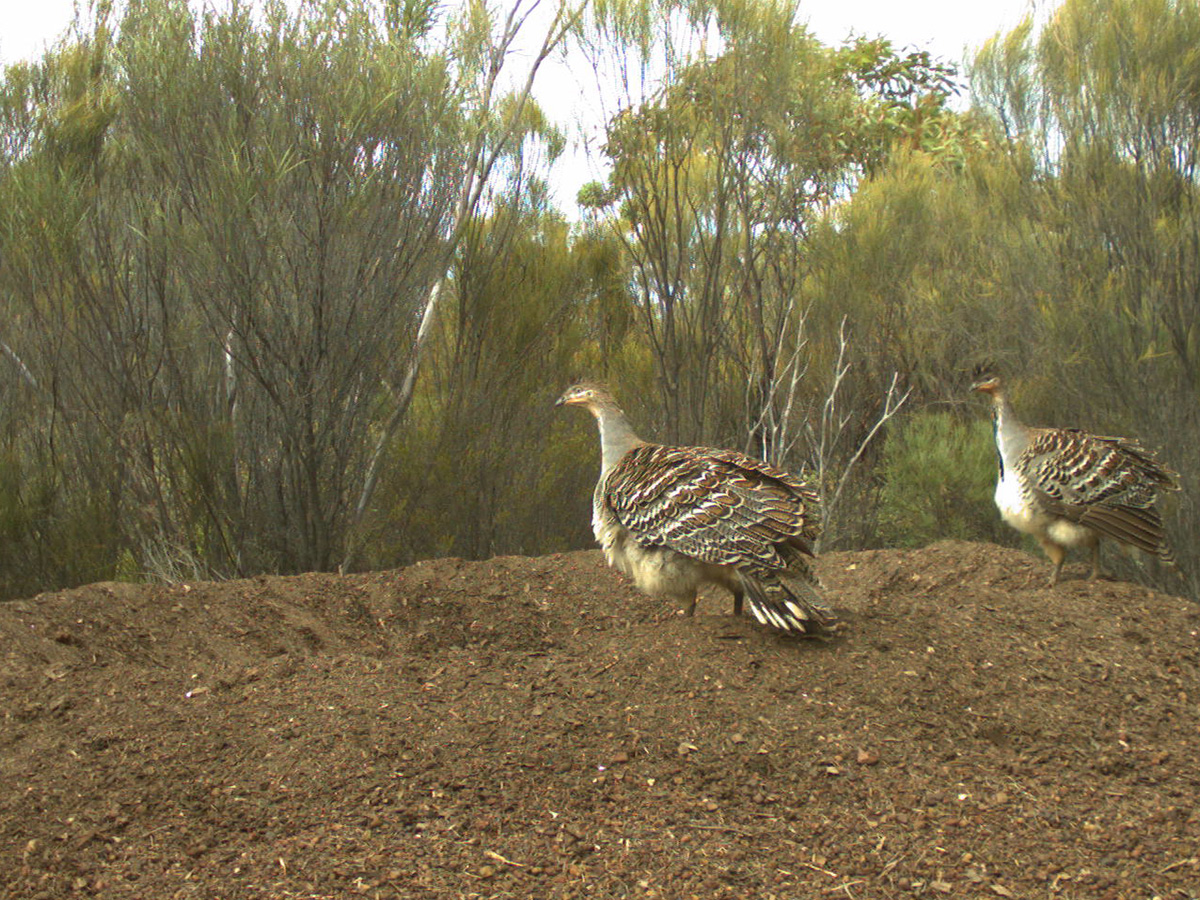
At Ecoscape, we conduct annual monitoring on one of Australia’s most fascinating and elusive ground-dwelling birds, the Malleefowl (Leipoa ocellata).
What sets Malleefowl apart is their remarkable nesting behaviour. Rather than incubating eggs with body heat, Malleefowl build enormous nesting mounds from soil, sand, and decomposing leaf litter. These mounds act as natural compost heaps, using the heat from microbial activity to incubate their eggs – an impressive feat of thermal regulation. The male meticulously monitors the temperature inside the mound, adding or removing material to maintain it between 33-35°C, adjusting daily depending on weather conditions.
Despite their adaptations, Malleefowl populations are in decline and key threats include:
- habitat loss and fragmentation, especially due to land clearing
- introduced predators like foxes and feral cats
- changed fire regimes that reduce the leaf litter essential for mound building
- climate change, which adds uncertainty to breeding success.
Given their cryptic nature and low population densities, effective monitoring programs are vital. These long-term efforts provide insight into breeding activity, population trends, and habitat quality. Camera traps, mound surveys, industry partnerships and community science initiatives all play a role in collecting reliable data.
Protecting Malleefowl means protecting the complex ecosystems they represent. Their presence tells us a lot about the health of our natural landscapes, and their future depends on strong science, active land management, and developing industry and community partnerships.
